Dreaming of a permanent government job in Kerala? Lakhs of candidates write Kerala PSC exams every year, but only those with a clear plan reach the rank list. Smart Kerala PSC preparation is not about studying 15 hours a day. It is about knowing the syllabus, practising previous papers, revising regularly and managing negative marks.
This guide gives a complete, easy plan for Kerala PSC preparation for beginners and repeaters: registration, syllabus focus areas, a daily timetable, the best study sources, exam-day strategy and common mistakes.
Kerala PSC Preparation: Quick Overview
| Item | Details |
|---|---|
| Conducting body | Kerala Public Service Commission |
| Registration | One Time Registration on the Thulasi portal |
| Exam type | Mostly objective (OMR or online) multiple-choice tests |
| Negative marking | Usually one-third mark deducted for each wrong answer |
| Language | Questions in English and/or Malayalam depending on the post |
| Key step before exam | Submit confirmation within the given period to get the admission ticket |
Step 1: Complete One Time Registration
Every candidate must create a profile on the Kerala PSC official website through One Time Registration (Thulasi). Keep these ready:
- A recent photograph and signature as per the specified size and format.
- Aadhaar number and an ID proof.
- Educational qualification details.
- Mobile number and email.
After registration, you apply for each notification from your profile. Check our Kerala PSC recruitment 2026 page for current vacancies.
Step 2: Understand the Exam Pattern and Syllabus
Kerala PSC publishes a detailed syllabus for each exam. Many common exams (such as Degree level and 10th/Plus Two level preliminary tests) cover similar areas:
- History (Indian and Kerala)
- Geography (India, Kerala, world basics)
- Indian Constitution and polity
- Economics and planning
- General science (physics, chemistry, biology)
- Current affairs
- Arts, sports, literature and culture of Kerala
- Simple arithmetic and mental ability
- General English
- Regional language (Malayalam)
- Computer basics and IT
Always download the official syllabus for your post. Good Kerala PSC preparation starts by printing it and ticking topics as you complete them.
Step 3: Collect the Right Study Materials
- SCERT textbooks: Class 5 to 10 social science and science books are the foundation for many questions.
- Previous question papers: Available on the PSC website. These show repeated topics and question style.
- A good rank file: Choose one popular, updated rank file and finish it fully instead of collecting many books.
- Monthly current affairs: From reliable publications or apps.
- PSC Bulletin: The commission’s publication for notifications and updates.
Step 4: Make a Realistic Daily Timetable
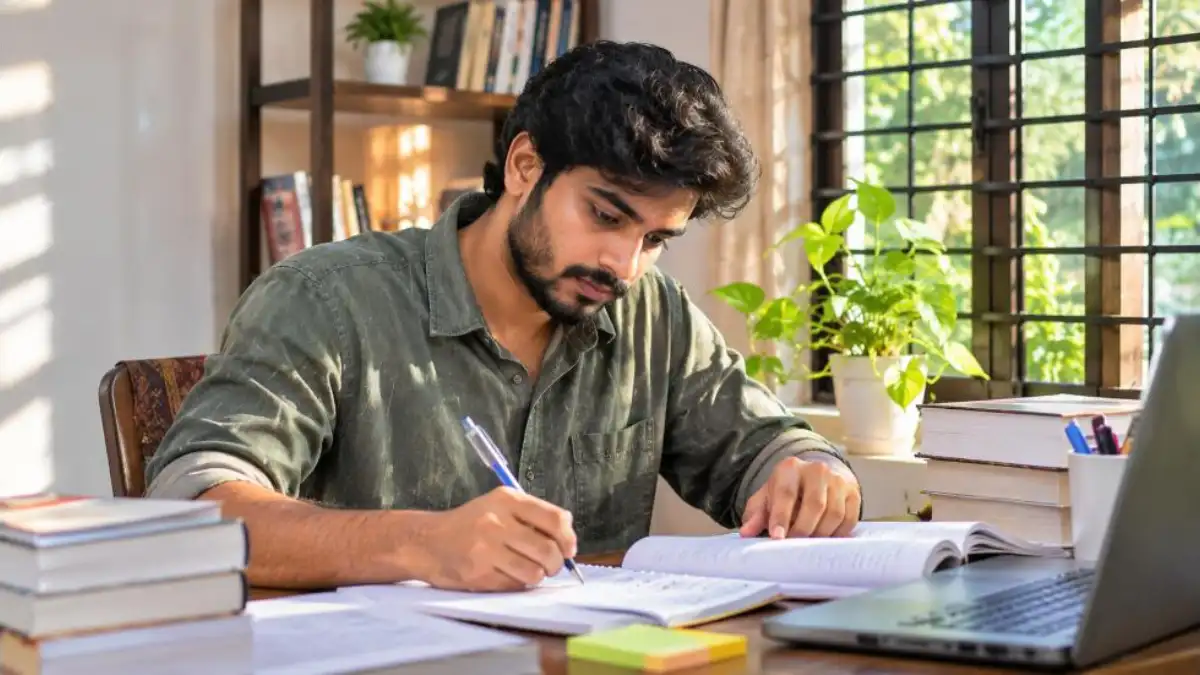
Consistency beats long, irregular study sessions. Here is a sample timetable for working candidates and full-time aspirants.
| Time | Working candidate (3 hours) | Full-time aspirant (7–8 hours) |
|---|---|---|
| Early morning | 1 hour: new topic (history/geography) | 2 hours: new topics |
| Morning | — | 2 hours: science and polity |
| Afternoon | — | 1 hour: maths and mental ability |
| Evening | 1 hour: maths/English/Malayalam | 1 hour: English and Malayalam |
| Night | 1 hour: current affairs and revision | 1–2 hours: previous papers and revision |
Keep one day a week for a full mock test and weak-area revision.
Step 5: Subject-Wise Kerala PSC Preparation Tips
History
Focus on the Indian freedom struggle, Kerala renaissance leaders, social reform movements and important dates. Make timelines and charts.
Geography
Learn Kerala’s rivers, districts, national parks, wildlife sanctuaries, dams and soil types. Use a map while studying.
Indian Constitution
Study articles, schedules, amendments, fundamental rights and duties, Directive Principles, and constitutional bodies. Questions on articles are very common.
General Science
Revise SCERT science textbooks. Focus on vitamins, diseases, inventions, units, scientific instruments and basic chemistry.
Maths and Mental Ability
Practise percentages, ratio, time and work, time and distance, averages, simple and compound interest, number series and coding-decoding. Daily practice of 20 questions is enough to build speed.
English and Malayalam
Focus on grammar rules, synonyms, antonyms, idioms, one-word substitutes and spelling. For Malayalam, revise grammar, famous works and authors.
Current Affairs
Cover the last 6 to 12 months: Kerala government schemes, national news, awards, sports, appointments and important days.
Step 6: Practise Previous Question Papers
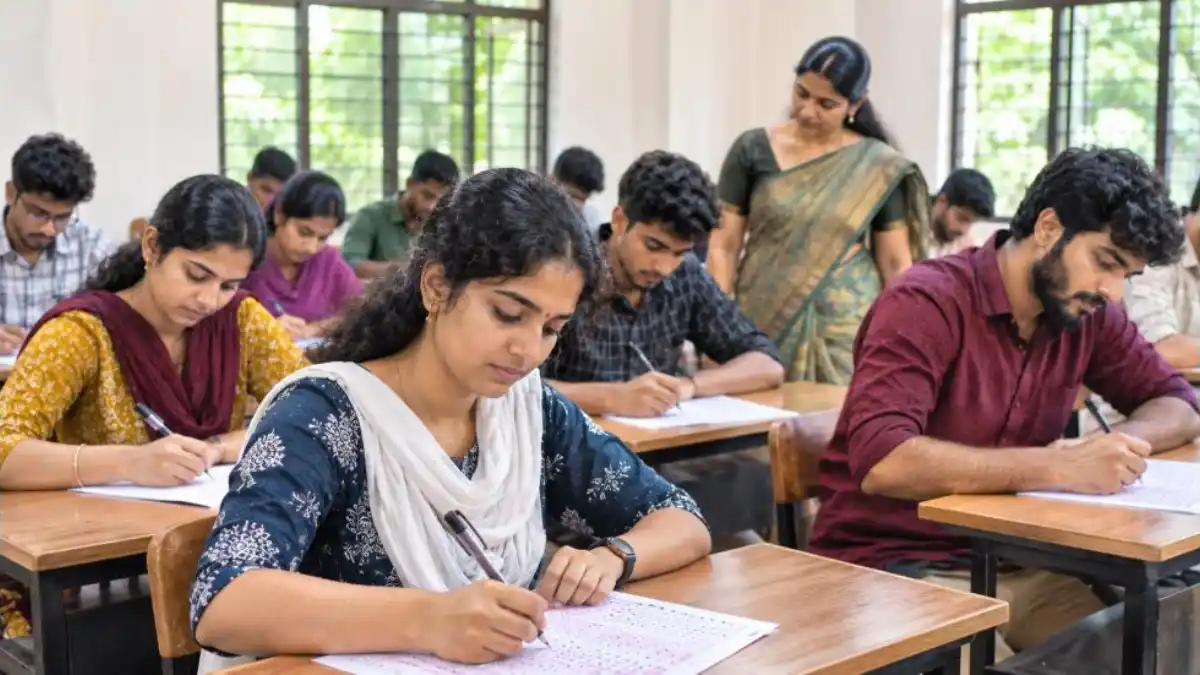
Previous papers are the heart of Kerala PSC preparation. Many questions repeat directly or in a slightly different form.
- Solve at least the last 5 years of papers for your exam level.
- Time yourself exactly as in the real exam.
- After each test, note every wrong or guessed question in a “mistake notebook”.
- Revise the mistake notebook every week.
- Check official answer keys; see our guide on the Kerala PSC answer key.
Step 7: Handle Negative Marking Smartly
Because a wrong answer usually costs one-third of a mark, random guessing hurts. Use this rule:
- Answer when you are sure.
- Guess only if you can confidently eliminate two of the four options.
- Skip questions you have no idea about.
Mock tests help you find your ideal attempt count and accuracy.
Step 8: Revise Using the 1-7-30 Method
Most aspirants forget what they studied because they never revise. Try this simple system:
- Day 1: Study the topic and make short notes.
- Day 7: Revise the short notes and solve 20 questions on it.
- Day 30: Quick revision and a mixed test.
Step 9: Don’t Miss the Confirmation
For many exams, Kerala PSC asks candidates to submit a confirmation that they will write the exam within a fixed period. Only those who confirm can download the admission ticket. Missing this step means missing the exam, no matter how good your Kerala PSC preparation is. Check your profile and SMS regularly.
Exam-Day Strategy
- Reach the centre early with the admission ticket and original ID proof.
- Carry the permitted pen as instructed.
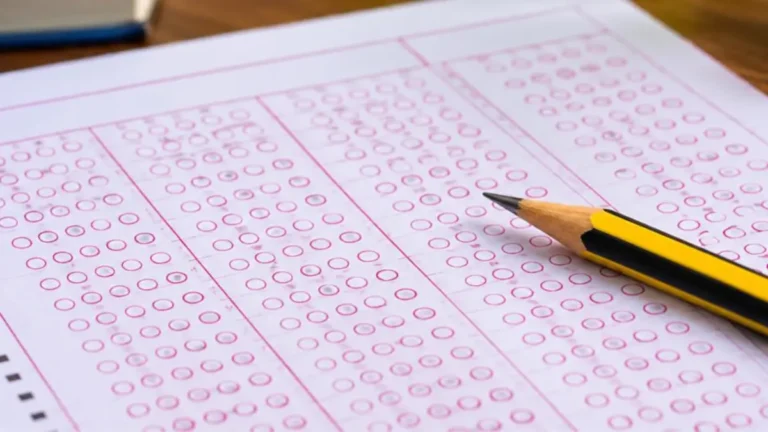
- Read instructions carefully and fill details correctly on the OMR sheet.
- First round: answer all questions you are sure of.
- Second round: attempt questions where you can eliminate options.
- Leave time to check the OMR bubbles.

Common Mistakes in Kerala PSC Preparation
- Collecting too many books and finishing none.
- Ignoring maths and English because they feel hard.
- Skipping previous papers.
- Studying without revision.
- Over-guessing and losing marks to negative marking.
- Not updating One Time Registration details or missing confirmation.
- Comparing yourself with others and losing motivation.
Kerala PSC Preparation for Different Exam Levels
| Level | Example posts | Focus areas |
|---|---|---|
| 10th level | LGS, LDC (where applicable), Village Field Assistant | SCERT basics, simple maths, Kerala facts, current affairs |
| Plus Two level | Police Constable, Excise Officer, Fireman | Wider GK, constitution, science, physical tests for uniformed posts |
| Degree level | Secretariat Assistant, Sub Inspector, Assistant | Deeper polity, economics, English, maths, reasoning, Malayalam |
| Technical posts | Assistant Engineer, Pharmacist, Staff Nurse | Subject syllabus plus general knowledge part |
| Teaching posts | LP/UP Assistant, HSA | Subject, teaching aptitude, KTET where required |
Adapt your Kerala PSC preparation to the level and syllabus of the post you are targeting. Exam names and eligibility are defined in each notification.
Kerala-Specific Topics You Must Not Skip
- Kerala renaissance leaders: Sree Narayana Guru, Ayyankali, Chattampi Swamikal, Vaikunda Swamikal, Pandit Karuppan, V.T. Bhattathiripad and others.
- Important movements: Vaikom Satyagraha, Guruvayur Satyagraha, Malayali Memorial, Ezhava Memorial.
- Kerala geography: 44 rivers, longest and shortest rivers, backwaters, hill stations, dams.
- Districts: formation, headquarters and special features.
- Kerala government welfare schemes and missions.
- Art forms: Kathakali, Mohiniyattam, Theyyam, Koodiyattam and famous artists.
- Malayalam literature: Jnanpith winners, famous works and pen names.
Online vs Offline Kerala PSC Preparation
| Mode | Advantages | Limitations |
|---|---|---|
| Self-study with books | Low cost, flexible | Needs strong discipline |
| Online classes and apps | Daily quizzes, recorded classes, affordable | Phone distraction |
| Offline coaching centre | Structured schedule, peer group, doubt clearing | Fees and travel time |
Many toppers combine self-study with a low-cost online test series. Pick what fits your budget and routine.
Motivation Tips for Long Preparation
- Set weekly targets instead of only a final goal.
- Track your mock test scores in a notebook to see progress.
- Join a small, serious study group for discussion.
- Limit social media to a fixed time.
- Take one short break day every two weeks to avoid burnout.
- Remember why you started: a stable job and security for your family.
Real Example
Sreeja, a homemaker from Palakkad, started Kerala PSC preparation at 29 with two small children. She studied two hours early morning and one hour at night, used SCERT books and one rank file, and solved previous papers every Sunday. After 14 months, she secured a rank in a degree-level exam and got an appointment. Her secret was a fixed routine and regular revision, not long hours.
Physical Efficiency Test for Uniformed Posts
Posts like Police Constable, Excise Civil Officer and Fireman include a physical efficiency test after the written exam. Start fitness training early with running, push-ups and sprints. Check the exact events and standards in the official notification, and train safely to avoid injuries.
90-Day Kerala PSC Preparation Plan
If an exam is about three months away, use this phased plan. It works for most general exams and can be adjusted for technical posts.
Days 1–30: Foundation
- Read SCERT social science and science books for Classes 8–10.
- Cover Indian Constitution basics and Kerala history.
- Practise 20 maths questions daily on basic topics.
- Read current affairs for 30 minutes daily.
- Take one previous paper every Sunday to know your starting level.
Days 31–60: Coverage and Practice
- Complete one rank file fully, topic by topic.
- Learn Kerala geography with maps and Kerala renaissance in detail.
- Increase maths and reasoning practice to 30 questions daily.
- Take two mock tests a week and update your mistake notebook.
- Revise English and Malayalam grammar.
Days 61–90: Revision and Speed
- Revise short notes and the mistake notebook every day.
- Take a full-length mock test every alternate day.
- Focus on high-frequency topics from previous papers.
- Revise the last 6 months of current affairs.
- Sleep well in the final week; avoid starting new books.
This phased approach keeps Kerala PSC preparation balanced between learning, practice and revision.
How to Make Short Notes That Work
Good short notes are the secret weapon of Kerala PSC preparation. Write them in your own words, on one page per topic, using bullet points, tables and small diagrams. Highlight dates, names and numbers in a different colour. Before the exam, you can revise an entire subject from these pages in an hour instead of re-reading big books.
Digital notes in a notes app also work, but many candidates remember handwritten notes better. Choose what suits you and stay consistent.
Using Mobile Apps Wisely
Apps offering daily quizzes and current affairs can support Kerala PSC preparation, especially for working candidates who study during travel. Use them for short practice sessions, but do not let endless scrolling replace focused study. Turn off notifications from other apps during study time, and set a daily limit for social media.
Kerala PSC Preparation for Working Professionals
If you have a full-time job, use early mornings for new topics when the mind is fresh. Use lunch breaks for 15-minute quizzes and travel time for audio revision or current affairs. Weekends can be used for mock tests and weekly revision. Even 2–3 focused hours a day add up to more than 700 hours in a year, which is enough to become a serious competitor.
What to Do After the Exam
- Note down questions you remember and check them with the provisional answer key.
- Calculate your expected score after negative marking.
- If you believe an answer key entry is wrong, submit a complaint through the official process within the deadline with valid evidence.
- Keep certificates ready for verification if you are shortlisted.
- Continue studying for upcoming exams; do not wait idle for results.
Document Verification Checklist
- SSLC certificate (for date of birth).
- Educational qualification certificates and mark lists.
- Caste/community certificate and non-creamy layer certificate, if claiming reservation.
- Experience certificates, if required for the post.
- Disability or ex-servicemen certificates, if applicable.
- Original ID proof used in the One Time Registration.
Keep the names and dates consistent across documents. If there are differences, get them corrected early, because mismatches can delay or stop your appointment.
Healthy Habits During Preparation
Long months of study can affect health. Walk or exercise for 30 minutes daily, eat on time, drink enough water and sleep at least seven hours. A healthy body keeps your memory sharp and helps you stay calm in the exam hall.
Final Word on Kerala PSC Preparation
Every rank holder was once a beginner who did not know where to start. What made the difference was a simple plan followed every day. Choose your target exam, gather a few good materials, make a timetable you can actually keep and test yourself every week. Celebrate small wins, learn from every mock test and keep going even when progress feels slow. Steady Kerala PSC preparation over months is far more powerful than last-minute cramming, and the reward is a secure government career that supports you and your family for life.
Bookmark this guide, share it with friends who are also preparing, and come back to it whenever you need to reset your plan. Good luck with your exam.
Frequently Asked Questions
How long does Kerala PSC preparation take?
With 3–4 focused hours daily, most beginners need 6 to 12 months to become competitive for common exams.
Is coaching necessary?
Not necessary. Many candidates succeed with self-study using SCERT books, a good rank file, previous papers and mock tests. Coaching helps with discipline and doubt clearing.
Are SCERT textbooks enough?
They are the foundation but not enough alone. Add previous papers, current affairs and a rank file.
How many hours should I study daily?
Quality matters more than hours. Three to four focused hours with revision is better than ten distracted hours.
Is there negative marking in Kerala PSC?
Yes, for most objective exams, a fraction of a mark (usually one-third) is deducted for each wrong answer. Check the instructions for your exam.
Conclusion
Successful Kerala PSC preparation is a mix of the right materials, a steady timetable, regular revision and lots of practice with previous papers. Complete your One Time Registration, follow the syllabus, revise with the 1-7-30 method and never miss the confirmation. Stay consistent and your name can be on the next rank list.