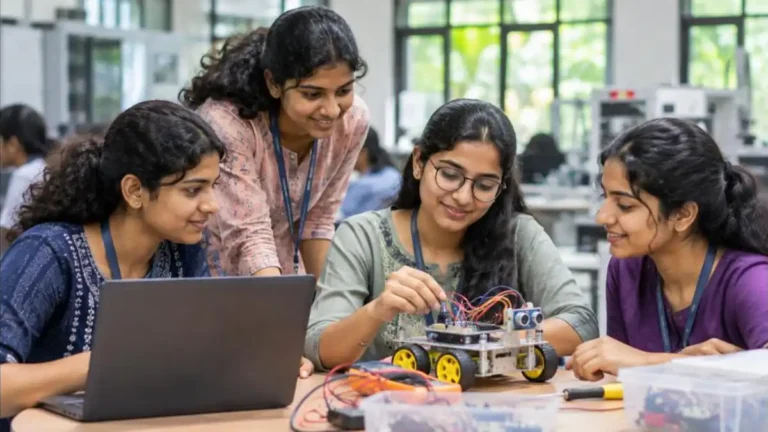
The central sector scholarship is one of the most valuable merit-based scholarships for students who have just finished Class 12 and joined a college or university. Officially called the Central Sector Scheme of Scholarship for College and University Students (CSSS), it is now part of the PM-USP (Pradhan Mantri Uchchatar Shiksha Protsahan) umbrella scheme run by the Department of Higher Education, Ministry of Education. It provides yearly financial support to bright students from families with modest incomes.
This guide explains everything about the central sector scholarship in 2026: eligibility, scholarship amount, number of scholarships, how to apply on the National Scholarship Portal (NSP), documents required, renewal rules, verification process and common mistakes to avoid.

Central Sector Scholarship at a Glance
| Feature | Details |
| Official name | Central Sector Scheme of Scholarship for College and University Students (CSSS) |
| Umbrella scheme | PM-USP, Department of Higher Education |
| Number of fresh scholarships | 82,000 per year (split equally between boys and girls) |
| Merit condition | Above the 80th percentile of successful candidates in the Class 12 board |
| Income limit | Gross family income up to ₹4.5 lakh per year |
| Amount (UG, first three years) | ₹12,000 per year |
| Amount (PG) | ₹20,000 per year |
| Application | Online on the National Scholarship Portal |
| Payment | Direct Benefit Transfer (DBT) to the student’s bank account |
Who Is Eligible for the Central Sector Scholarship?
To apply for a fresh central sector scholarship, students generally need to meet all of these conditions:
- You must have scored above the 80th percentile of successful candidates in the relevant stream of your Class 12 board examination.
- You must be pursuing a regular, full-time degree course (not correspondence or distance mode) in a recognised college or institution.
- Your gross annual family income must not exceed ₹4.5 lakh.
- You should not be receiving benefits from any other scholarship scheme, including state-run scholarships or fee waivers, as per scheme rules.
- Students pursuing diploma courses are generally not eligible.
The 80th percentile cut-off is calculated separately for each board and stream, so the exact marks needed vary. Your board publishes or communicates the list of eligible students for the central sector scholarship.
Scholarship Amount and Duration
| Level | Amount per Year |
| Undergraduate (years 1 to 3) | ₹12,000 |
| Postgraduate | ₹20,000 |
| Professional courses (4th and 5th year, e.g., B.Tech or integrated courses) | ₹20,000 |
The central sector scholarship continues for the normal duration of the course, provided the student meets renewal conditions every year. The amount is credited directly to the student’s Aadhaar-seeded bank account through DBT.
How to Apply for the Central Sector Scholarship on NSP
Applications for the central sector scholarship are made online through the National Scholarship Portal. The process now starts with a One Time Registration (OTR).
Step 1: Complete One Time Registration (OTR)
- Visit the official National Scholarship Portal.
- Choose the option for One Time Registration under the applicant corner.
- Enter your mobile number and verify with OTP.
- Complete Aadhaar-based eKYC or the alternative process allowed on the portal.
- Note down the OTR number generated.
For detailed help, see our guide on NSP OTR registration.
Step 2: Fill the Scholarship Application
- Log in to NSP with your OTR number and password or OTP.
- Fill in personal, academic and bank details.
- Select the Central Sector Scheme of Scholarship for College and University Students from the list of central schemes you are eligible for.
- Enter Class 12 details, including board, roll number and marks.
- Enter current course details, institution and year of study.
- Upload documents as required and submit the application.
- Download or print the application for your records.
Step 3: Verification
After submission, your application is verified first by your institution (Institute Nodal Officer) and then by the state or board-level authority. Make sure your college has registered on NSP. Follow up with your college scholarship cell to ensure verification is completed before the deadline.

Documents Required
- Aadhaar number linked to your mobile and bank account
- Class 12 mark sheet
- Family income certificate issued by the competent authority (in Kerala, through the village office or e-District portal)
- Bonafide or admission certificate from your college
- Fee receipt of the current academic year
- Bank account details (account number and IFSC) in the student’s name
- Recent passport-size photograph
- Caste certificate, if applicable
Keep scanned copies of all documents ready in the formats and sizes specified on the portal. Mismatches in name or date of birth between Aadhaar, certificates and bank account are a common reason for rejection.
Renewal of the Central Sector Scholarship
Once selected, you need to apply for renewal every year on NSP to continue receiving the central sector scholarship. The general conditions for renewal are:
- Secure at least 50% marks in the previous year’s annual examination.
- Maintain adequate attendance, generally at least 75%.
- Maintain good conduct and discipline.
- Continue in a regular, full-time course.
Missing a renewal deadline can stop your scholarship for that year, so mark the NSP schedule in your calendar.
Reservation in Central Sector Scholarship
The scheme follows the central government reservation policy for SC, ST, OBC and EWS categories, along with horizontal reservation for persons with disabilities, as per the guidelines. Scholarships are also distributed among states and boards based on the population of the relevant age group and the number of students who pass Class 12 from each board.
Background of the Scheme
The Central Sector Scheme of Scholarship was started to give financial assistance to meritorious students from low-income families so they can meet day-to-day expenses while pursuing higher studies. Over time, it was merged with the interest subsidy and other student support components under the PM-USP umbrella. The scholarship amount and the number of slots were revised to reach more students, and the application process moved fully online to the National Scholarship Portal, making it more transparent and faster.
Because the scheme is funded by the central government and implemented across all states, students from every board, including state boards, CBSE and ISC, can benefit if they meet the conditions. This makes it one of the widest-reaching merit scholarships in India.
Who Cannot Apply
- Students pursuing diploma, certificate or distance-mode programmes.
- Students with gross family income above ₹4.5 lakh per year.
- Students below the 80th percentile cut-off of their board and stream.
- Students already receiving another scholarship or fee waiver that overlaps, as per scheme rules.
- Students who have failed to meet renewal conditions in the previous year.
Role of Colleges and Nodal Officers
Colleges play a vital role in the process. Every institution must register on NSP and appoint an Institute Nodal Officer, who verifies student applications online. If your college is not registered, your application cannot move forward. Students should check with the college office at the start of the academic year and remind the nodal officer about verification deadlines. Many colleges in Kerala have a dedicated scholarship cell that helps students with NSP-related queries.
The state-level nodal officer and the board also verify merit and other details. Delays at any level can affect payment, so it is a good idea for students to keep checking the application status on NSP and respond quickly if any query is raised.
Central Sector Scholarship for Kerala Students
Kerala students who pass the Higher Secondary (Plus Two) examination conducted by the Directorate of General Education (Higher Secondary wing), or CBSE and ISC boards, can apply if they fall above the 80th percentile of their board and stream. Students from Kerala should keep these points in mind:
- Get the family income certificate early through the e-District portal or Akshaya centre, because it is mandatory.
- Check whether you are receiving any state scholarship such as e-Grantz; you generally cannot receive two overlapping scholarships. Our guide on e-Grantz scholarship 2026-27 explains that scheme.
- Ensure your college has completed NSP registration and appointed a nodal officer.
- Seed Aadhaar with your bank account so DBT payments reach you without delay.

Common Mistakes to Avoid
| Mistake | How to Avoid |
| Applying in distance or correspondence mode courses | Only regular full-time courses are eligible |
| Income certificate missing or outdated | Get a fresh certificate from the competent authority |
| Name mismatch between Aadhaar and mark sheet | Correct details before applying |
| Bank account not Aadhaar-seeded | Visit your bank to seed Aadhaar and enable DBT |
| Institute verification not done | Follow up with your college nodal officer |
| Missing renewal deadline | Track NSP dates every year |
| Applying for multiple overlapping scholarships | Choose the one that suits you best as per rules |
Central Sector Scholarship vs Other Scholarships
| Scholarship | Basis | Who Should Consider |
| Central sector scholarship (CSSS) | Merit plus income limit | Top Class 12 scorers from families with income up to ₹4.5 lakh |
| Post-matric scholarships | Category and income based | SC, ST, OBC and minority students as per scheme rules |
| State scholarships (e.g., e-Grantz) | Category and state rules | Eligible students in Kerala institutions |
| AICTE Pragati and Saksham | Girls and specially-abled students in technical education | Eligible students in AICTE-approved institutions |
For a wider list of options, see our guide on scholarships for Kerala students. Students who need larger support for fees can also look at the PM Vidyalaxmi scheme for collateral-free education loans.
How the Scholarship Money Is Paid
The central sector scholarship amount is paid through Direct Benefit Transfer to the student’s bank account. Payments are usually released after the application has been verified at all levels and the funds are processed by the government. Track the payment status on NSP and through the Public Financial Management System (PFMS) if needed. Delays can occur if any detail in the application or bank account does not match.
Example: How a Kerala Student Benefits
Arjun from Palakkad scored very high marks in the Kerala Plus Two science stream, placing him well above the 80th percentile for his board and stream. His father is a daily wage worker, and the family’s annual income is below ₹4.5 lakh. Arjun joined a regular BSc Physics programme at a government college.
He completed One Time Registration on NSP, applied for the central sector scholarship with his income certificate, mark sheet and bonafide certificate, and asked the college scholarship cell to verify his application. After verification, he received ₹12,000 for the year through DBT. By renewing every year with good marks and attendance, he can receive the scholarship for all three years of his degree, and ₹20,000 per year if he continues to an MSc.
This example is illustrative, but it shows how the scholarship can cover books, travel and other study expenses for a deserving student.
Typical Application Timeline
| Stage | What Happens |
| Portal opening | NSP opens applications for central schemes for the academic year |
| Student application | Students complete OTR and submit fresh or renewal applications |
| Institute verification | College nodal officer checks documents and verifies online |
| Board / state verification | Higher-level authorities verify merit and other conditions |
| Merit list and sanction | Selected students are finalised as per slots and reservation |
| Payment | Amount released through DBT to the bank account |
Exact dates change each year, so follow the NSP homepage and announcements from your college.
What to Do if Your Application Is Rejected
If your central sector scholarship application is marked defective or rejected, read the reason shown on NSP. Some defects can be corrected within the allowed time, such as wrong bank details or missing documents. Contact your institute nodal officer immediately. If the rejection is due to eligibility, such as income above the limit or marks below the cut-off, look for other scholarships that match your profile.
Using the Scholarship Money Wisely
Although the amount may seem modest, it can make a real difference when used carefully. Students often use it to buy textbooks and reference books, pay for travel to college, cover hostel or mess expenses, purchase a basic laptop or tablet for studies, or pay exam and course fees for skill certifications. Keep a simple record of how you spend the money; it helps you plan better and shows responsibility.
Tips to Improve Your Chances
- Apply early: do not wait until the last week, when the portal is busy.
- Check eligibility carefully: confirm the 80th percentile condition for your board and stream.
- Keep documents updated: income certificates must be valid for the relevant year.
- Coordinate with your college: institute verification is essential for approval.
- Watch your SMS and email: NSP sends alerts for defects, verification and payment.
- Study consistently: maintaining 50% marks and attendance keeps the central sector scholarship active every year.
Advice for Parents
Parents can help their children secure the central sector scholarship by keeping family documents ready. Apply for the income certificate as soon as Plus Two results are out, make sure the student has a bank account in their own name with Aadhaar seeded, and keep copies of mark sheets and certificates safe. Encourage your child to check NSP regularly and to talk to the college scholarship cell without hesitation. Small steps like these prevent last-minute stress and missed deadlines.
It is also important to be honest in the application. Declaring the correct family income and not applying for overlapping scholarships protects the student from future recovery of funds or disqualification. Scholarships are meant to support genuine need and merit, and accurate information keeps the system fair for everyone.
Beyond the Scholarship: Building Your Future
A scholarship is a recognition of your effort, but it is only the beginning. Use your college years to build skills that employers value, such as communication, computer proficiency, problem-solving and teamwork. Join clubs, take part in competitions, do internships and learn a new skill every year. Students who combine good academic records with practical skills often find better opportunities in higher studies and jobs.
Finally, stay connected with seniors who have received the scholarship before you. They can share practical advice about documents, verification and renewal, and help you avoid common errors. Learning from their experience saves time and ensures that your application moves smoothly through every stage, from submission to payment.
Frequently Asked Questions
What is the central sector scholarship amount?
Students receive ₹12,000 per year for the first three years of graduation and ₹20,000 per year for postgraduation. Professional courses get ₹20,000 per year in the fourth and fifth years.
Who is eligible for the central sector scholarship?
Students above the 80th percentile in their Class 12 board stream, pursuing regular degree courses, with family income up to ₹4.5 lakh and not receiving other scholarships.
How many central sector scholarships are given each year?
82,000 fresh scholarships are offered every year, divided equally between boys and girls.
Where do I apply for the central sector scholarship?
Apply online on the National Scholarship Portal after completing One Time Registration.
Can I get this scholarship for a diploma course?
No. Diploma courses are generally not covered. The scheme is for regular degree and postgraduate courses.
Do I need to apply again every year?
Yes. You must submit a renewal application on NSP every year and meet the marks and attendance conditions.
Conclusion
The central sector scholarship rewards hard work in Class 12 and helps students from families with limited income continue higher education without financial stress. If you scored above the 80th percentile in your board and stream, have family income up to ₹4.5 lakh and are pursuing a regular degree, apply on the National Scholarship Portal as soon as applications open. Keep your documents in order, coordinate with your college for verification and renew the central sector scholarship every year. With timely action, this scholarship can support you throughout your degree and postgraduate studies.